Science – Age 11-12

1. All sorts of scientific questions
Test knowledge skills with 40 scientific questions. Ideal to refresh what was learned or to provide a real challenge for some brain storming research.
Don't forget to download the answer key for quick reference.
SCIENCE
Understand basic scientific knowledge and develop research skills using a variety of processes and techniques.
Please note some printable resources and associated answer key (where applicable) are sourced from our historic library dating back to as early as 2003. They may contain website addresses and information that is no longer current or correct.

1. Scientific Names List
Four pages that list scientific names and their meaning in alphabetical order.
Ideal as a reference guide for any of the following worksheets in this category - Highly Recommended

1. Scientific Word Search
A large variety of scientific names are used to provide a challenge using new and already learned scientific knowledge.
Learn with Fun!
SCIENCE
Recognize scientific names and their meaning.

1a. Mental Challenge 1-2
Ten challenging scientific questions on each side, 20 questions in total. Cut the worksheet in half and watch scientific knowledge increase as kids have fun searching for the answers.
Increase research skills using multimedia, encyclopaedia, dictionary, resource books or the Internet.
SCIENCE
Understand basic scientific knowledge and develop research skills using a variety of processes and techniques.
ENGLISH
Read a variety of texts.
TECHNOLOGY
Use multimedia and the Internet.

2. Mental Challenge 3-4
Ten challenging scientific questions on each side, 20 questions in total. Cut the worksheet in half and watch scientific knowledge increase as kids have fun searching for the answers.
Increase research skills using multimedia, encyclopaedia, dictionary, resource books or the Internet.
SCIENCE
Understand basic scientific knowledge and develop research skills using a variety of processes and techniques.
ENGLISH
Read a variety of texts.
TECHNOLOGY
Use multimedia and the Internet.

2. Scientific Word Search
A large variety of scientific names are used to provide a challenge using new and already learned scientific knowledge.
Learn with Fun!
SCIENCE
Recognize scientific names and their meaning.

3. Mental Challenge 5-6
Ten challenging scientific questions on each side, 20 questions in total. Cut the worksheet in half and watch scientific knowledge increase as kids have fun searching for the answers.
Increase research skills using multimedia, encyclopaedia, dictionary, resource books or the Internet.
SCIENCE
Understand basic scientific knowledge and develop research skills using a variety of processes and techniques.
ENGLISH
Read a variety of texts.
TECHNOLOGY
Use multimedia and the Internet.

3. Scientific Word Search
A large variety of scientific names are used to provide a challenge using new and already learned scientific knowledge.
Learn with Fun!
SCIENCE
Recognize scientific names and their meaning.

4. Mental Challenge 7-8
Ten challenging scientific questions on each side, 20 questions in total. Cut the worksheet in half and watch scientific knowledge increase as kids have fun searching for the answers.
Increase research skills using multimedia, encyclopaedia, dictionary, resource books or the Internet.
SCIENCE
Understand basic scientific knowledge and develop research skills using a variety of processes and techniques.
ENGLISH
Read a variety of texts.
TECHNOLOGY
Use multimedia and the Internet.

4. Scientific Word Search
A large variety of scientific names are used to provide a challenge using new and already learned scientific knowledge.
Learn with Fun!
SCIENCE
Recognize scientific names and their meaning.

5. Mental Challenge 9-10
Ten challenging scientific questions on each side, 20 questions in total. Cut the worksheet in half and watch scientific knowledge increase as kids have fun searching for the answers.
Increase research skills using multimedia, encyclopaedia, dictionary, resource books or the Internet.
SCIENCE
Understand basic scientific knowledge and develop research skills using a variety of processes and techniques.
ENGLISH
Read a variety of texts.
TECHNOLOGY
Use multimedia and the Internet.

5. Scientific Word Search
A large variety of scientific names are used to provide a challenge using new and already learned scientific knowledge.
Learn with Fun!
SCIENCE
Recognize scientific names and their meaning.

6. Scientific Word Search
A large variety of scientific names are used to provide a challenge using new and already learned scientific knowledge.
Learn with Fun!
SCIENCE
Recognize scientific names and their meaning.

Amperistic
A large variety of scientific names are used to provide a challenge using new and already learned scientific knowledge.
Learn with Fun!
SCIENCE
Recognize scientific names and their meaning.

Animal Classification
SCIENCE
Understand scientific facts about mammals, reptiles, marsupials, insects, monotremes and birds.
ENGLISH
Read and follow instructions.
Please note some printable resources and associated answer key (where applicable) are sourced from our historic library dating back to as early as 2003. They may contain website addresses and information that is no longer current or correct.

Animal Gender
Learn about animal gender with this fun worksheet.
SCIENCE
Understand scientific facts about animal gender.
Please note some printable resources and associated answer key (where applicable) are sourced from our historic library dating back to as early as 2003. They may contain website addresses and information that is no longer current or correct.

Animal Gender
SCIENCE
Understand scientific facts about mammals, reptiles, marsupials, insects, monotremes and birds.
ENGLISH
Read and follow instructions.
Please note some printable resources and associated answer key (where applicable) are sourced from our historic library dating back to as early as 2003. They may contain website addresses and information that is no longer current or correct.


Around we go
A large variety of scientific names are used to provide a challenge using new and already learned scientific knowledge.
Learn with Fun!
SCIENCE
Recognize scientific names and their meaning.

Australian Animals
SCIENCE
Understand scientific facts about mammals, reptiles, marsupials, insects, monotremes and birds.
ENGLISH
Read and follow instructions.
Please note some printable resources and associated answer key (where applicable) are sourced from our historic library dating back to as early as 2003. They may contain website addresses and information that is no longer current or correct.

Clouds
Learn about nimbostratus and cumulonimbus clouds. Find out what a cirrus cloud looks like and have fun drawing these types of clouds after observing them.
SCIENCE
Understand scientific facts.
ART
Understand and develop basic art concepts.
ENGLISH
Read and follow instructions.
TECHNOLOGY
Use a variety of mediums for research such as the Internet or Multimedia.
Please note some printable resources and associated answer key (where applicable) are sourced from our historic library dating back to as early as 2003. They may contain website addresses and information that is no longer current or correct.

Ferns
SCIENCE
Understand basic scientific knowledge and develop research skills using a variety of processes and techniques.
ENGLISH
Read a variety of texts.
TECHNOLOGY
Use multimedia and the Internet.

Fungi
SCIENCE
Understand basic scientific knowledge and develop research skills using a variety of processes and techniques.
ENGLISH
Read a variety of texts.
TECHNOLOGY
Use multimedia and the Internet.

Gender Drawing
SCIENCE
Understand scientific facts about mammals, reptiles, marsupials, insects, monotremes and birds.
ENGLISH
Read and follow instructions.
Please note some printable resources and associated answer key (where applicable) are sourced from our historic library dating back to as early as 2003. They may contain website addresses and information that is no longer current or correct.

General Science Questions 01
SCIENCE
Understand scientific facts about mammals, reptiles, marsupials, insects, monotremes and birds.
ENGLISH
Read and follow instructions.
Please note some printable resources and associated answer key (where applicable) are sourced from our historic library dating back to as early as 2003. They may contain website addresses and information that is no longer current or correct.

General Science Questions 02
SCIENCE
Understand scientific facts about mammals, reptiles, marsupials, insects, monotremes and birds.
ENGLISH
Read and follow instructions.
Please note some printable resources and associated answer key (where applicable) are sourced from our historic library dating back to as early as 2003. They may contain website addresses and information that is no longer current or correct.

General Science Questions 03
SCIENCE
Understand scientific facts about mammals, reptiles, marsupials, insects, monotremes and birds.
ENGLISH
Read and follow instructions.
Please note some printable resources and associated answer key (where applicable) are sourced from our historic library dating back to as early as 2003. They may contain website addresses and information that is no longer current or correct.

General Science Questions 04
SCIENCE
Understand scientific facts about mammals, reptiles, marsupials, insects, monotremes and birds.
ENGLISH
Read and follow instructions.
Please note some printable resources and associated answer key (where applicable) are sourced from our historic library dating back to as early as 2003. They may contain website addresses and information that is no longer current or correct.

Gestation
Research the gestation period of a variety of animals before compiling the found information in a graph.
Learn how long each animal lives, what a young, male and a female is called, the group they belong to and the female's gestation period.
SCIENCE
Understand more in-depth scientific knowledge and develop research skills using a variety of processes and techniques.
MATHS
Understand how a graph works.

Half Flower Diagram
SCIENCE
Understand basic scientific knowledge and develop research skills using a variety of processes and techniques.
ENGLISH
Read a variety of texts.
TECHNOLOGY
Use multimedia and the Internet.

He, She and Baby Me
Gender recognition and what each one is called is an entertaining yet challenging activity.
SCIENCE
Understand scientific facts about animal gender.
Please note some printable resources and associated answer key (where applicable) are sourced from our historic library dating back to as early as 2003. They may contain website addresses and information that is no longer current or correct.

Histology
Learn that 'Histo-' is a combining form, indicating animal or plant tissue as in histology.
Improve dictionary skills and increase vocabulary.
SCIENCE
Understand more in-depth scientific knowledge and develop research skills using a variety of processes and techniques.

Hurricanes
Learn more about hurricanes, improve research skills, understand scientific data and develop a better overall understanding of natural disasters.
SCIENCE
Develop more indepth scientific knowledge and research skills using a variety of processes and techniques.
ENGLISH
Writing - develop creative writing skills.
Reading - read written text and follow basic instructions.

Hydrogen
Understand that 'Hydro' - 'Hydr' is a combining form indicating or denoting water, liquid or fluid.
Improve dictionary skills, advance scientific knowledge and enjoy a challenge.
SCIENCE
Develop more in-depth scientific knowledge and research skills using a variety of processes and techniques.

Implosion
Learn that an implosion is the reverse of an explosion. Improve dictionary skills and scientific knowledge. Multimedia or the Internet can be used for research.
SCIENCE
Develop more in-depth scientific knowledge and research skills using a variety of processes and techniques.
ENGLISH
Read a variety of texts.
TECHNOLOGY
Use multimedia and the Internet.

Indigo
Understand that indigo is blue in colour and that it used to be derived from plants but now it is made artificially from a compound of carbon, hydrogen, oxygen and nitrogen.
Improve reading, writing and dictionary skills. Enjoy researching and communicating.
SCIENCE
Develop more in-depth scientific knowledge and research skills using a variety of processes and techniques.
ENGLISH
Writing - develop creative writing skills.
Reading - read written text and follow basic instructions.
Communication - improve communication skills.
TECHNOLOGY
Use multimedia and the Internet.

Indium (In)
Learn that Indium is a rare element and occurs mainly in zinc materials. Learn what it is used for and recognize items that contain Indium.
Find out the symbol, atomic no, atomic weight, valency, relative density, melting and boiling points.
SCIENCE
Develop more in-depth scientific knowledge and research skills using a variety of processes and techniques.
ENGLISH
Read a variety of texts.
TECHNOLOGY
Use multimedia and the Internet.

Keratin
Learn about keratin. Improve dictionary skills, advance scientific knowledge and enjoy a challenge.
SCIENCE
Develop more in-depth scientific knowledge and research skills using a variety of processes and techniques.
ENGLISH
Read a variety of texts.
TECHNOLOGY
Use multimedia and the Internet.

Keratin
A large variety of scientific names are used to provide a challenge using new and already learned scientific knowledge.
Learn with Fun!
SCIENCE
Recognize scientific names and their meaning.

Krypton
Learn about Sir William Ramsay and what he had to do with krypton. Improve dictionary skills, advance scientific knowledge and enjoy a challenge.
SCIENCE
Develop more in-depth scientific knowledge and research skills using a variety of processes and techniques.

Krypton - coloured lighting
A hands-on experiment using coloured lights.
An enjoyable activity!
SCIENCE
Develop more in-depth scientific knowledge and research skills using a variety of processes and techniques.

Landslide
Learn about natural disasters and develop a better understanding of the damage and loss of life it causes.
A project about Mount St. Helens.
SCIENCE
Develop more in-depth scientific knowledge and research skills using a variety of processes and techniques.
ENGLISH
Writing - develop creative writing skills.
TECHNOLOGY
Use multimedia and the Internet.

Lapis Lazuli
Lapis Lazuli is usually a beautiful, deep blue stone which can be cut and polished to make ornaments. Learn that lapis lazuli can come in other colours such as violet or greenish-blue.
Have fun and enjoy learning!
SCIENCE
Develop more in-depth scientific knowledge and research skills using a variety of processes and techniques.

Laughing gas - Nitrous Oxide
Learn about nitrous oxide and the reason it is more commonly called laughing gas.
SCIENCE
Develop more in-depth scientific knowledge and research skills using a variety of processes and techniques.

Magma
A large variety of scientific names are used to provide a challenge using new and already learned scientific knowledge.
Learn with Fun!
SCIENCE
Recognize scientific names and their meaning.

Magnetite
Learn about powerful natural magnets such as lodestone and incorporate dictionary skills with magnetomotive, magnetograph, magneto, magnetic pole and magnetosphere.
SCIENCE
Develop more in-depth scientific knowledge and research skills using a variety of processes and techniques.

Mental Challenge 11-12
Ten challenging scientific questions on each side, 20 questions in total. Cut the worksheet in half and watch scientific knowledge increase as kids have fun searching for the answers.
Increase research skills using multimedia, encyclopaedia, dictionary, resource books or the Internet.
SCIENCE
Understand basic scientific knowledge and develop research skills using a variety of processes and techniques.
ENGLISH
Read a variety of texts.
TECHNOLOGY
Use multimedia and the Internet.

Mental Challenge 13-14
Ten challenging scientific questions on each side, 20 questions in total. Cut the worksheet in half and watch scientific knowledge increase as kids have fun searching for the answers.
Increase research skills using multimedia, encyclopaedia, dictionary, resource books or the Internet.
SCIENCE
Understand basic scientific knowledge and develop research skills using a variety of processes and techniques.
ENGLISH
Read a variety of texts.
TECHNOLOGY
Use multimedia and the Internet.

Mental Challenge 15-16
Ten challenging scientific questions on each side, 20 questions in total. Cut the worksheet in half and watch scientific knowledge increase as kids have fun searching for the answers.
Increase research skills using multimedia, encyclopaedia, dictionary, resource books or the Internet.
SCIENCE
Understand basic scientific knowledge and develop research skills using a variety of processes and techniques.
ENGLISH
Read a variety of texts.
TECHNOLOGY
Use multimedia and the Internet.

Mental Challenge 17-18
Ten challenging scientific questions on each side, 20 questions in total. Cut the worksheet in half and watch scientific knowledge increase as kids have fun searching for the answers.
Increase research skills using multimedia, encyclopaedia, dictionary, resource books or the Internet.
SCIENCE
Understand basic scientific knowledge and develop research skills using a variety of processes and techniques.
ENGLISH
Read a variety of texts.
TECHNOLOGY
Use multimedia and the Internet.

Mental Challenge 19-20
Ten challenging scientific questions on each side, 20 questions in total. Cut the worksheet in half and watch scientific knowledge increase as kids have fun searching for the answers.
Increase research skills using multimedia, encyclopaedia, dictionary, resource books or the Internet.
SCIENCE
Understand basic scientific knowledge and develop research skills using a variety of processes and techniques.
ENGLISH
Read a variety of texts.
TECHNOLOGY
Use multimedia and the Internet.

Mental Challenge 21-22
Ten challenging scientific questions on each side, 20 questions in total. Cut the worksheet in half and watch scientific knowledge increase as kids have fun searching for the answers.
Increase research skills using multimedia, encyclopaedia, dictionary, resource books or the Internet.
SCIENCE
Understand basic scientific knowledge and develop research skills using a variety of processes and techniques.
ENGLISH
Read a variety of texts.
TECHNOLOGY
Use multimedia and the Internet.

Mental Challenge 23-24
Ten challenging scientific questions on each side, 20 questions in total. Cut the worksheet in half and watch scientific knowledge increase as kids have fun searching for the answers.
Increase research skills using multimedia, encyclopaedia, dictionary, resource books or the Internet.
SCIENCE
Understand basic scientific knowledge and develop research skills using a variety of processes and techniques.
ENGLISH
Read a variety of texts.
TECHNOLOGY
Use multimedia and the Internet.

Mental Challenge 25-26
Ten challenging scientific questions on each side, 20 questions in total. Cut the worksheet in half and watch scientific knowledge increase as kids have fun searching for the answers.
Increase research skills using multimedia, encyclopaedia, dictionary, resource books or the Internet.
SCIENCE
Understand basic scientific knowledge and develop research skills using a variety of processes and techniques.
ENGLISH
Read a variety of texts.
TECHNOLOGY
Use multimedia and the Internet.

Mental Challenge 27-28
Ten challenging scientific questions on each side, 20 questions in total. Cut the worksheet in half and watch scientific knowledge increase as kids have fun searching for the answers.
Increase research skills using multimedia, encyclopaedia, dictionary, resource books or the Internet.
SCIENCE
Understand basic scientific knowledge and develop research skills using a variety of processes and techniques.
ENGLISH
Read a variety of texts.
TECHNOLOGY
Use multimedia and the Internet.

Mental Challenge 29-30
Ten challenging scientific questions on each side, 20 questions in total. Cut the worksheet in half and watch scientific knowledge increase as kids have fun searching for the answers.
Increase research skills using multimedia, encyclopaedia, dictionary, resource books or the Internet.
SCIENCE
Understand basic scientific knowledge and develop research skills using a variety of processes and techniques.
ENGLISH
Read a variety of texts.
TECHNOLOGY
Use multimedia and the Internet.

Mental Challenge 31-32
Ten challenging scientific questions on each side, 20 questions in total. Cut the worksheet in half and watch scientific knowledge increase as kids have fun searching for the answers.
Increase research skills using multimedia, encyclopaedia, dictionary, resource books or the Internet.
SCIENCE
Understand basic scientific knowledge and develop research skills using a variety of processes and techniques.
ENGLISH
Read a variety of texts.
TECHNOLOGY
Use multimedia and the Internet.

Mental Challenge 33-34
Ten challenging scientific questions on each side, 20 questions in total. Cut the worksheet in half and watch scientific knowledge increase as kids have fun searching for the answers.
Increase research skills using multimedia, encyclopaedia, dictionary, resource books or the Internet.
SCIENCE
Understand basic scientific knowledge and develop research skills using a variety of processes and techniques.
ENGLISH
Read a variety of texts.
TECHNOLOGY
Use multimedia and the Internet.

Mental Challenge 35-36
Ten challenging scientific questions on each side, 20 questions in total. Cut the worksheet in half and watch scientific knowledge increase as kids have fun searching for the answers.
Increase research skills using multimedia, encyclopaedia, dictionary, resource books or the Internet.
SCIENCE
Understand basic scientific knowledge and develop research skills using a variety of processes and techniques.
ENGLISH
Read a variety of texts.
TECHNOLOGY
Use multimedia and the Internet.

Mental Challenge 37-38
Ten challenging scientific questions on each side, 20 questions in total. Cut the worksheet in half and watch scientific knowledge increase as kids have fun searching for the answers.
Increase research skills using multimedia, encyclopaedia, dictionary, resource books or the Internet.
SCIENCE
Understand basic scientific knowledge and develop research skills using a variety of processes and techniques.
ENGLISH
Read a variety of texts.
TECHNOLOGY
Use multimedia and the Internet.

Naphthalene
Understand that naphthalene repels insects and pests, what it is used for and how, obtained from coal, tar and petroleum.
SCIENCE
Develop more in-depth scientific knowledge and research skills using a variety of processes and techniques.

Naphthalene
A large variety of scientific names are used to provide a challenge using new and already learned scientific knowledge.
Learn with Fun!
SCIENCE
Recognize scientific names and their meaning.

Nekton
Understand that nekton is the name given to all the animals that swim actively in the sea at various levels.
A poster making activity for the hands-on students.
SCIENCE
Develop more in-depth scientific knowledge and research skills using a variety of processes and techniques.

Oil
A large variety of scientific names are used to provide a challenge using new and already learned scientific knowledge.
Learn with Fun!
SCIENCE
Recognize scientific names and their meaning.

Organs
Learn about organs such as the heart, lungs, kidneys, bowels, liver and brain.
Improve dictionary skills, advance scientific knowledge and enjoy a challenge.
SCIENCE
Develop more in-depth scientific knowledge and research skills using a variety of processes and techniques.

Parasites
Understand that a parasite is any species of plant or animal that lives in close association with another specie, taking food from it but giving nothing back to it in return.
Conduct outdoor research and hunt for that special parasite.
SCIENCE
Develop more in-depth scientific knowledge and research skills using a variety of processes and techniques.
ENGLISH
Writing - develop writing skills.
Reading - read written text and follow basic instructions.

Pasteurize
A large variety of scientific names are used to provide a challenge using new and already learned scientific knowledge.
Learn with Fun!
SCIENCE
Recognize scientific names and their meaning.

Peat
Scientific names are used to provide a challenge using new and already learned scientific knowledge.
Learn with Fun!
SCIENCE
Recognize scientific names and their meaning.

People and weather conditions
Learn who relies on certain types of weather conditions and why.
A worksheet with a difference!
SCIENCE
Understand scientific facts.
SOCIETY & ENVIRONMENT
Learn about social and/or environmental issues.
Please note some printable resources and associated answer key (where applicable) are sourced from our historic library dating back to as early as 2003. They may contain website addresses and information that is no longer current or correct.

Pests
SCIENCE
Understand scientific facts about mammals, reptiles, marsupials, insects, monotremes and birds.
ENGLISH
Read and follow instructions.
Please note some printable resources and associated answer key (where applicable) are sourced from our historic library dating back to as early as 2003. They may contain website addresses and information that is no longer current or correct.

Planets
An open ended project which could take hours, days or weeks to complete depending on your requirements.
Ideal for enthusiasts who want to learn more about the planets.
SCIENCE
Understand scientific facts about the planets.
TECHNOLOGY
Use a variety of mediums for research such as the Internet or Multimedia.
ART
Understand and develop basic art concepts using a variety of mediums and techniques.
MATHS
Understand mathematical concepts used in calculating distances, space and time.
ENGLISH
Develop reading and writing skills.
Please note some printable resources and associated answer key (where applicable) are sourced from our historic library dating back to as early as 2003. They may contain website addresses and information that is no longer current or correct.

Plant search
SCIENCE
Understand basic scientific knowledge and develop research skills using a variety of processes and techniques.
ENGLISH
Read a variety of texts.
TECHNOLOGY
Use multimedia and the Internet.

Puzzling pains
This highly recommended science activity is a real brain teaser. Great if you are looking for a challenge with a difference.
Learn about mammals, reptiles, marsupials, insects, monotremes and birds.
SCIENCE
Understand scientific facts about mammals, reptiles, marsupials, insects, monotremes and birds.
Please note some printable resources and associated answer key (where applicable) are sourced from our historic library dating back to as early as 2003. They may contain website addresses and information that is no longer current or correct.

Quicksand
Learn where quicksand may be found and what it can do if you walk in it.
Use thinking skills to solve a practical problem and save a friend who has walked into quicksand.
SCIENCE
Develop more in-depth scientific knowledge and research skills using a variety of processes and techniques.
ENGLISH
Writing - develop creative writing skills.

Quinine
Learn that quinine is a drug to lower fever, particularly in treating maleria and is obtained from the bark of the cinchona tree in South America and Southeast Asia. It can also be made synthetically.
SCIENCE
Develop more in-depth scientific knowledge and research skills using a variety of processes and techniques.

Reflex
Scientific names are used to provide a challenge using new and already learned scientific knowledge.
Learn with Fun!
SCIENCE
Recognize scientific names and their meaning.

Rocks
Learn about igneous, sedimentary and metamorphic rocks. Research the types of rocks in the local area and enjoy science at its best.
SCIENCE
Understand scientific facts.
TECHNOLOGY
Use a variety of mediums for research such as the Internet or Multimedia.
ENVIRONMENT
Learn about environmental issues.
Please note some printable resources and associated answer key (where applicable) are sourced from our historic library dating back to as early as 2003. They may contain website addresses and information that is no longer current or correct.

Saint Elmo
Scientific names are used to provide a challenge using new and already learned scientific knowledge.
Learn with Fun!
SCIENCE
Recognize scientific names and their meaning.

Scientrific
A large variety of scientific names are used to provide a challenge using new and already learned scientific knowledge.
Learn with Fun!
SCIENCE
Recognize scientific names and their meaning.

Sentence Sense
A large variety of scientific names are used to provide a challenge using new and already learned scientific knowledge.
Learn with Fun!
SCIENCE
Recognize scientific names and their meaning.

Sharks
SCIENCE
Understand scientific facts about mammals, reptiles, marsupials, insects, monotremes and birds.
ENGLISH
Read and follow instructions.
Please note some printable resources and associated answer key (where applicable) are sourced from our historic library dating back to as early as 2003. They may contain website addresses and information that is no longer current or correct.

Sharks more
SCIENCE
Understand scientific facts about mammals, reptiles, marsupials, insects, monotremes and birds.
ENGLISH
Read and follow instructions.
Please note some printable resources and associated answer key (where applicable) are sourced from our historic library dating back to as early as 2003. They may contain website addresses and information that is no longer current or correct.

Tannin
Scientific names are used to provide a challenge using new and already learned scientific knowledge.
Learn with Fun!
SCIENCE
Recognize scientific names and their meaning.

The Barn Owl
An open ended project about the barn owl will inspire learning and improve research skills.
TECHNOLOGY
Use a variety of mediums for research such as the Internet or Multimedia.
SOCIETY & ENVIRONMENT
Learn about social and/or environmental issues.
ENGLISH
Read and follow instructions.
SCIENCE
Understand scientific facts.

The Digestive System
Science – the human body, the digestive system
English – word recognition, reading, writing, spelling, recognizing homophones
Please note some printable resources and associated answer key (where applicable) are sourced from our historic library dating back to as early as 2003. They may contain website addresses and information that is no longer current or correct.

The Emu
Learn about the delightful Australian emu, improve mapping skills and enjoy an open ended project.
SCIENCE
Understand scientific facts about birds.
MATHS
Mapping skills
ENGLISH
Develop reading and writing skills.

The Human Body
Learning Area: Health Education, health of individuals & populations.
Linking Learning Areas: English reading, writing. Science biological.
Please note some printable resources and associated answer key (where applicable) are sourced from our historic library dating back to as early as 2003. They may contain website addresses and information that is no longer current or correct.

The Muscles
Science - the human body, the muscles
English - word recognition, reading, writing, spelling

The Nervous System
Science - the human body, the nervous system
English - word recognition, reading, spelling

The Skeleton
Task: Draw and label a skeleton
Learning Area: Health Education, health of individuals & populations
Linking Learning Areas: English reading, writing. Science biological.
Please note some printable resources and associated answer key (where applicable) are sourced from our historic library dating back to as early as 2003. They may contain website addresses and information that is no longer current or correct.

The Sun
Develop an understanding that all living things need the sun to survive.
SCIENCE
Understand scientific facts.
ENVIRONMENT
Learn about environmental issues.
Please note some printable resources and associated answer key (where applicable) are sourced from our historic library dating back to as early as 2003. They may contain website addresses and information that is no longer current or correct.

The Weather
Learn about cirrus, cumulus and stratus clouds. Understand weather patterns in regions such as deserts and rainforests.
SCIENCE
Understand basic scientific knowledge and develop research skills using a variety of processes and techniques.
Please note some printable resources and associated answer key (where applicable) are sourced from our historic library dating back to as early as 2003. They may contain website addresses and information that is no longer current or correct.

Trees
Learn about the cambium layer, cortex, sapwood, heartwood, phloem, medulla, xylem and stomata.
For some heavy research and in-depth knowledge about trees, try this challenging worksheet. Download the teacher note for quick reference.
SCIENCE
Understand basic scientific knowledge and develop research skills using a variety of processes and techniques.
ENGLISH
Read a variety of texts.
TECHNOLOGY
Use multimedia and the Internet.
Please note some printable resources and associated answer key (where applicable) are sourced from our historic library dating back to as early as 2003. They may contain website addresses and information that is no longer current or correct.

UFO
Scientific names are used to provide a challenge using new and already learned scientific knowledge.
Learn with Fun!
SCIENCE
Recognize scientific names and their meaning.

Ultrasonics
Learn what ultrasonic sound waves are and what ultrasound is used for.
SCIENCE
Develop more in-depth scientific knowledge and research skills using a variety of processes and techniques.

Uranium
Learn what uranium is, have fun learning and enjoy a challenge.
SCIENCE
Develop more in-depth scientific knowledge and research skills using a variety of processes and techniques.

Virus
Scientific names are used to provide a challenge using new and already learned scientific knowledge.
Learn with Fun!
SCIENCE
Recognize scientific names and their meaning.

Vulcanizing
Understand that vulcanizing is a process for hardening rubber. Where does rubber come from and what is sulphur?
SCIENCE
Develop more in-depth scientific knowledge and research skills using a variety of processes and techniques.

Wardian Case
Find out what a Wardian Case looks like and what Mr. Ward has to do with it all.
A fun activity that draws upon creativity.
SCIENCE
Develop more in-depth scientific knowledge and research skills using a variety of processes and techniques.

Water
Scientific names are used to provide a challenge using new and already learned scientific knowledge.
Learn with Fun!
SCIENCE
Recognize scientific names and their meaning.

Water
Develop an understanding that all living things need water to survive.
SCIENCE
Understand basic scientific facts.
ENGLISH
Develop reading and writing skills.
Please note some printable resources and associated answer key (where applicable) are sourced from our historic library dating back to as early as 2003. They may contain website addresses and information that is no longer current or correct.

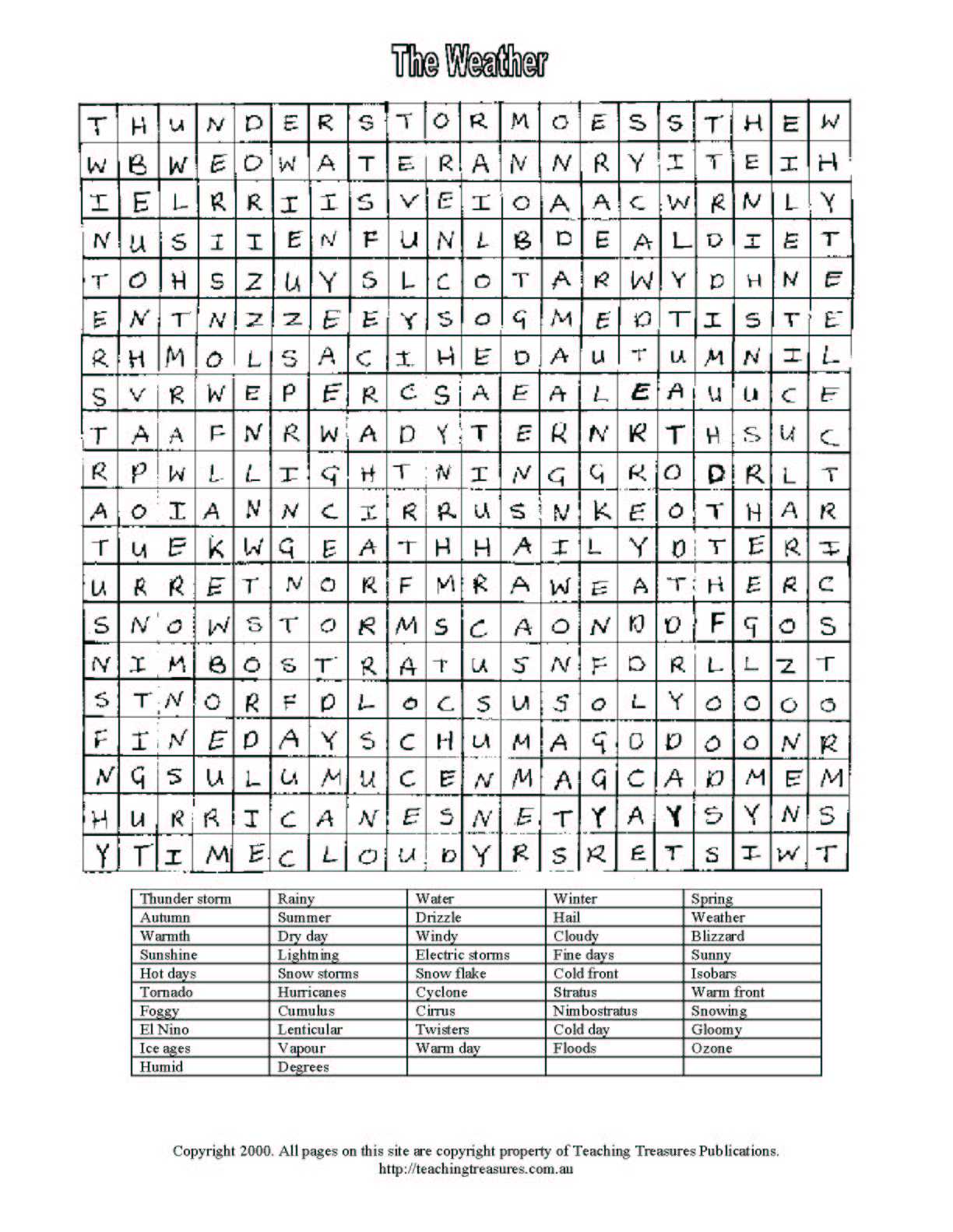
Weather
Scientific names are used to provide a challenge using new and already learned scientific knowledge.
Learn with Fun!
SCIENCE
Recognize scientific names and their meaning.

What is...
Improve dictionary skills and draw upon learned scientific knowledge about mammals, reptiles, marsupials, insects, monotremes, birds, rodents and amphibians.
For easy identification it is recommended to download the teacher note.
SCIENCE
Understand scientific facts about mammals, reptiles, marsupials, insects, monotremes, birds, rodents and amphibians.
Please note some printable resources and associated answer key (where applicable) are sourced from our historic library dating back to as early as 2003. They may contain website addresses and information that is no longer current or correct.

Xenon 1
Scientific names are used to provide a challenge using new and already learned scientific knowledge.
Learn with Fun!
SCIENCE
Recognize scientific names and their meaning.

Xenon 2
Scientific names are used to provide a challenge using new and already learned scientific knowledge.
Learn with Fun!
SCIENCE
Recognize scientific names and their meaning.

Xerostomia
Understand that xerostomia is the name given for an abnormal lack of saliva. Improve dictionary skills with a variety of not so common words and increase vocabulary skills.
SCIENCE
Develop more in-depth scientific knowledge and research skills using a variety of processes and techniques.

Yolk
Scientific names are used to provide a challenge using new and already learned scientific knowledge.
Learn with Fun!
SCIENCE
Recognize scientific names and their meaning.
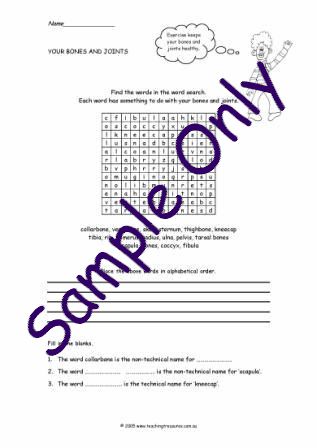
Your Bones and Joints
Science – the human body, bones and joints
English – word recognition, reading, writing, alphabetical order

Your Circulatory System
Science – the human body, the circulatory system
English – word recognition, reading, writing, spelling, alphabetical order, dictionary
skills.
Please note some printable resources and associated answer key (where applicable) are sourced from our historic library dating back to as early as 2003. They may contain website addresses and information that is no longer current or correct.

Ytterbium
Scientific names are used to provide a challenge using new and already learned scientific knowledge.
Learn with Fun!
SCIENCE
Recognize scientific names and their meaning.

Zodiac
Scientific names are used to provide a challenge using new and already learned scientific knowledge.
Learn with Fun!
SCIENCE
Recognize scientific names and their meaning.

Zygote
Scientific names are used to provide a challenge using new and already learned scientific knowledge.
Learn with Fun!
SCIENCE
Recognize scientific names and their meaning.